
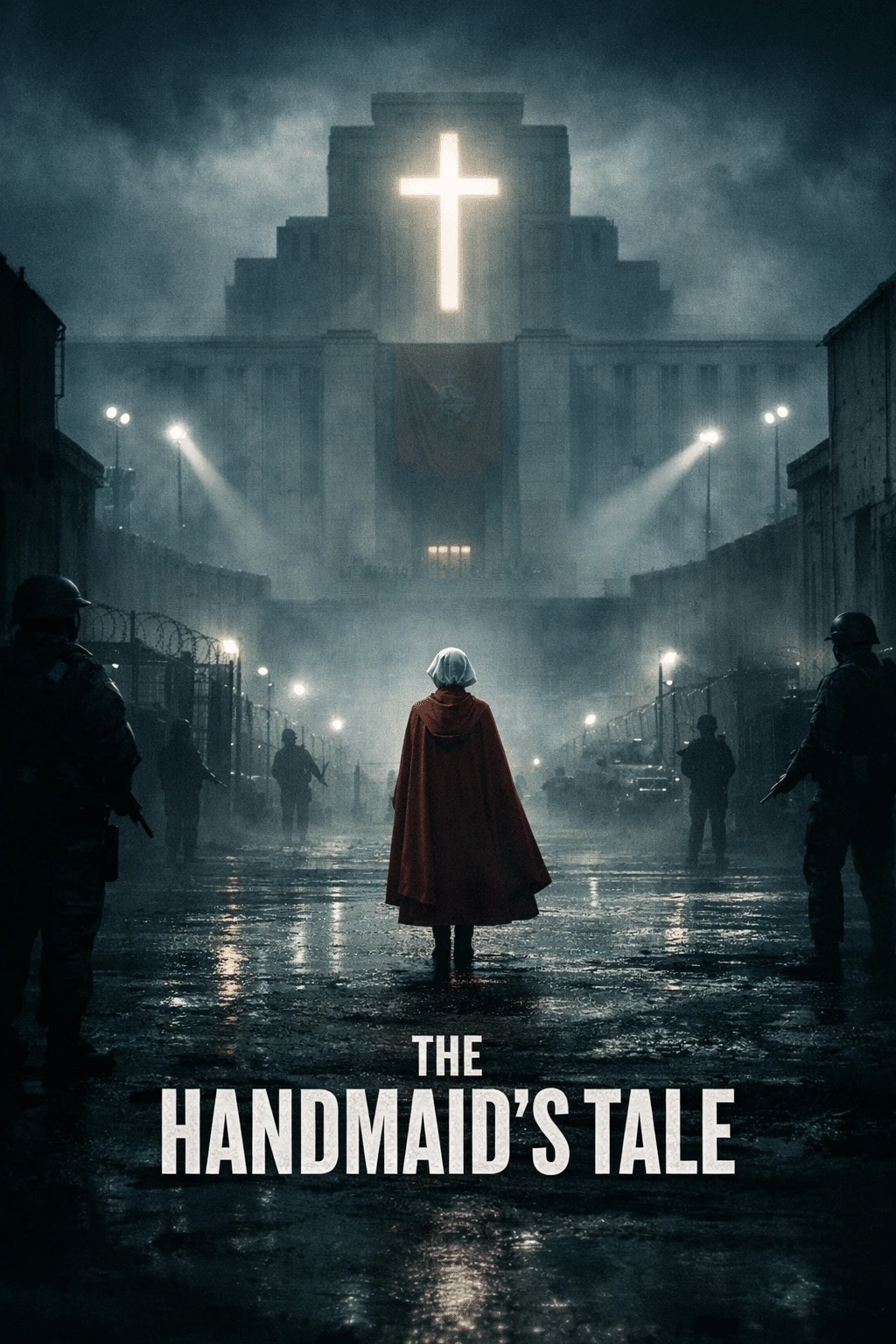
Hello, everyone! How’s everything? Today, I’m excited to share my thoughts on the gripping drama The Handmaid’s Tale, which offers one of the most chilling and honest depictions of authoritarian control, crafting a dystopian reality that feels unsettlingly pertinent to our present political situation.
Advertisements
The Handmaid’s Tale made its debut on Hulu on April 26, 2017, featuring six seasons with 10 episodes each, each lasting about 60 minutes. The series concluded with its sixth and final season, which premiered on April 8, 2025, and wrapped up with the finale on May 27, 2025. The Boys (TV series) Based on the renowned novel by Margaret Atwood, this dystopian series follows a totalitarian regime where fertile women are coerced into sexual servitude to address a declining birth rate.
The Handmaid’s Tale transcends mere science fiction entertainment. It serves as a potent metaphor regarding reproductive rights, religious extremism, and the vulnerability of democracy, resonating with alarming clarity in today’s political environment. The series effectively translates Atwood’s vision into compelling television that compels viewers to confront uncomfortable realities about power, control, and defiance.
Gilead’s Dystopia: The Fall of Democracy
The Handmaid’s Tale depicts the Republic of Gilead, a theocratic regime that arose from the disintegration of the United States due to environmental catastrophes and falling fertility rates. The show examines how swiftly democratic structures can disintegrate when fear and desperation empower extremists. Women are stripped of their rights and categorized based on their reproductive capabilities, forming a strict caste system that benefits the ruling class.
The meticulous world-building in The Handmaid’s Tale is both systematic and chilling, illustrating how authoritarian regimes manipulate religion, tradition, and crisis to rationalize the unimaginable. Each season reveals deeper layers of Gilead’s framework, showcasing the systematic dehumanization needed to uphold such a society. The series excels in demonstrating how ordinary individuals become complicit in extraordinary malevolence through a mix of fear, indoctrination, and self-preservation.
June Osborne: A Masterful Portrayal by Elisabeth Moss
Elisabeth Moss delivers one of the most impactful performances in television history as June Osborne, a character who evolves from an independent mother to a handmaid and ultimately a revolutionary. Moss’s interpretation has garnered her two Emmy Awards and several Golden Globe nominations, solidifying her status as one of the most talented dramatic actresses of her era. Her ability to express defiance through subtle facial expressions while confined in the restrictive handmaid attire is remarkable.
June’s character development spans the entirety of the series, showcasing her transformation from a frightened victim to a resilient survivor and ultimately an unyielding rebel. Moss brings incredible complexity to the role, balancing June’s fierce resolve with moments of fragility and despair. Her internal monologue narration offers vital insights into the psychological toll of systematic oppression, making viewers complicit witnesses to her anguish and defiance.
Serena Joy Waterford: A Multifaceted Collaborator
Yvonne Strahovski plays Serena Joy Waterford, the Commander’s wife who played a significant role in designing the very system that ultimately subjugates her. Serena Joy embodies the complex reality of women who collaborate with patriarchal structures, believing they can retain some degree of influence and safety. Strahovski’s nuanced performance reveals a character ensnared by her own decisions and the ideology she helped establish.
The dynamic between Serena Joy and June is among the most intricate in the series, oscillating between hostility, manipulation, and unexpected moments of empathy. Her character illustrates how internalized misogyny and religious extremism can pit women against one another, while also suggesting the potential for redemption and transformation. Strahovski infuses layers of remorse, desperation, and unyielding pride into this morally complex character.
The Cost of Freedom: The Reckoning of the Final Season
The sixth season, comprising 10 episodes, concludes June’s journey as she confronts the ultimate decision between personal liberty and societal reform. The final season examines the true price of resistance and the intricate nature of justice in a reality where everyone is both victim and aggressor. The series finale received mixed reviews from fans, achieving the lowest IMDb rating in the series’ history at 5.7 stars out of 10. ‘The Boys’ Isn’t the First Time Antony Starr and Karl Urban Have Starred in the Same Show, Their Previous Gigs in a Forgotten TV Series Will Blow Your Mind
The season poses challenging inquiries regarding forgiveness, redemption, and the cost of revolution. Without divulging specific details, the climactic episodes compel viewers to consider whether true healing is achievable after enduring such systemic trauma. The finale divides audiences precisely because it avoids offering easy resolutions to complex ethical dilemmas, remaining faithful to the series’ commitment to uncomfortable realities.
The Supporting Cast: Faces of Resistance and Oppression
The Handmaid’s Tale features exceptional performances from Ann Dowd as the menacing Aunt Lydia, Joseph Fiennes as the conflicted Commander Waterford, and Alexis Bledel as the fierce Emily. Each supporting character embodies different facets of survival, resistance, or collaboration under totalitarian rule, creating a rich fabric of human responses to systematic oppression.
The series excels at illustrating how authoritarianism impacts every layer of society, from the ruling Commanders to the oppressed Handmaids, as well as the compliant Wives and Aunts. Each character’s choices uncover fundamental truths about human nature under extreme duress, steering clear of simplistic villain-versus-hero narratives in favor of complex moral ambiguity.
Hulu’s Success Story
The Handmaid’s Tale emerged as Hulu’s flagship original series, winning eight Primetime Emmy Awards from 13 nominations in its inaugural season, including Outstanding Drama Series. The show’s triumph contributed to establishing Hulu as a formidable player in premium television content, demonstrating that streaming platforms could produce Emmy-winning dramas that rival traditional networks. The Handmaid’s Tale ignited numerous discussions regarding reproductive rights, religious extremism, and political resistance, transcending entertainment to become a cultural critique.
Why This Dystopian Masterpiece Is Essential Viewing
For those who appreciate thought-provoking dramas that engage with current political issues, The Handmaid’s Tale is an ideal series to binge on Hulu. This is not just entertainment; it serves as a cautionary tale about the fragility of freedom and the bravery required to oppose authoritarian oppression, which feels increasingly relevant with each passing year.
Why This Show Redefines Political Drama
The Handmaid’s Tale excels because it transforms speculative fiction into urgent contemporary discourse. By illustrating how swiftly democracy can erode and how everyday individuals can become both victims and aggressors, the series crafts television that is both entertaining and indispensable. It’s brutally honest, aesthetically compelling, and absolutely essential viewing for anyone wishing to comprehend the ongoing fight for human rights and dignity.
Series Overview
Number of Episodes: 56 episodes across 6 seasons (10 episodes each, finale aired May 27, 2025)
Platform: Hulu
Release Year: 2017-2025 (series concluded)
Current IMDb Rating: 8.4/10 (overall series rating)
Genre: Dystopian Drama/Political Thriller
Status: Series concluded with Season 6 finale
Protagonists: Elisabeth Moss (June Osborne), Yvonne Strahovski (Serena Joy Waterford)
Antagonist: The totalitarian regime of Gilead itself