
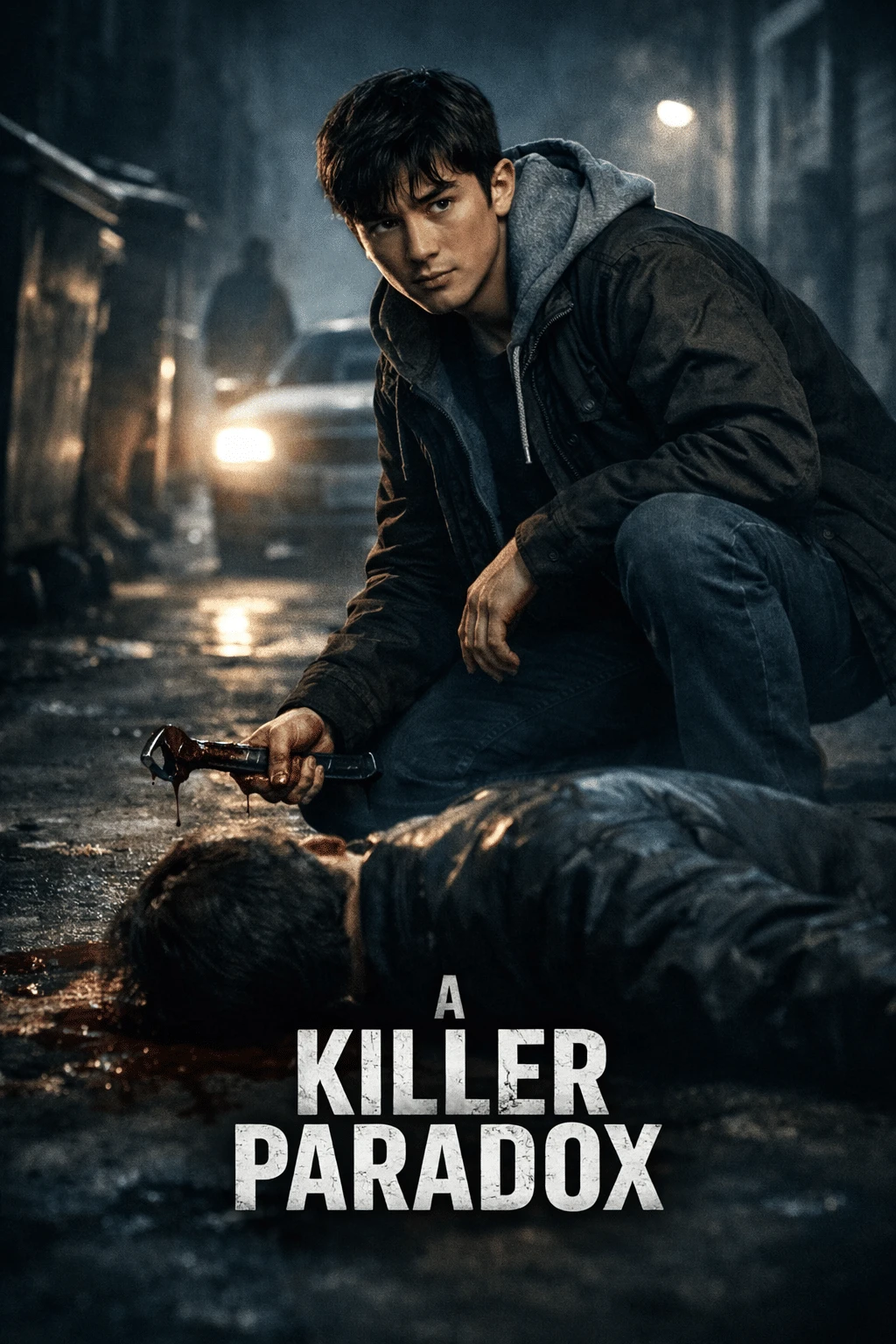
Hello, everyone! How are you? Today, I’m excited to share my thoughts on the gripping drama A Killer Paradox, which has emerged as one of Netflix’s most captivating and ethically intricate K-dramas of 2024. This psychological thriller takes viewers on a twisted ride where an accidental killing turns an average college student into an unexpected avenger.
Advertisements
A Killer Paradox debuted on Netflix on February 9, 2024, showcasing 8 thrilling episodes, each lasting around 60 minutes. Helmed by Lee Chang-hee (Hell Is Other People, The Villainess) and penned by Kim Da-min, this series is adapted from the Naver webtoon “Sarinjaonnangam” by Kkomabi. The show presents itself as a darkly comedic morality thriller that challenges audiences’ views on justice, destiny, and the fine line between heroism and crime.
The narrative centers around Lee Tang, a typical college student juggling a part-time job at a convenience store, whose life takes a drastic turn following one impulsive act that results in accidental murder. What differentiates A Killer Paradox from other crime dramas is its deep dive into moral ambiguity and the notion of “justifiable” killing. The series refrains from offering straightforward answers about morality, compelling viewers to reflect on their own ethical beliefs as the protagonist discovers he may possess an uncanny skill to recognize truly malevolent individuals.
The Unintentional Avenger: Lee Tang’s Dark Transformation
The story begins with a seemingly minor event: Lee Tang (Choi Woo-shik) finds himself in a dispute with a troublesome customer during his night shift at the convenience store. In a fit of anger, he accidentally kills the man with a hammer. However, A Killer Paradox swiftly uncovers that his victim was, in fact, a serial killer, establishing the central moral quandary that propels the entire series.
As Lee Tang struggles with his actions, he starts to notice a disturbing trend: the individuals who provoke his violent tendencies are themselves criminals. This realization leads him down a dark path, fostering a belief that he might have a supernatural ability to identify evil people. The series adeptly balances dark humor with genuine psychological terror as Lee Tang evolves from a directionless student into someone who views himself as an agent of justice.
Lee Tang (Choi Woo-shik): The Hesitant Anti-Hero
Choi Woo-shik delivers a performance that redefines his career as Lee Tang, revealing his range far beyond his celebrated role in Parasite. His depiction of an ordinary young man gradually succumbing to vigilante tendencies is both intriguing and chilling. A Killer Paradox provides Choi Woo-shik with the opportunity to delve into the psychological intricacies of someone convinced they are doing good while engaging in horrific acts.
Throughout the series, we observe Lee Tang’s transformation from a rudderless college student into a person who genuinely believes he is destined to eradicate evil from the world. Choi Woo-shik brilliantly captures the character’s inner conflict between his increasing confidence in his “mission” and the persistent doubt about whether he is becoming the very monster he seeks to destroy. His performance compels viewers to both support and fear his character, creating an unsettling viewing experience that highlights the show’s exceptional writing.
Detective Jang Nan-gam (Son Suk-ku): The Unyielding Pursuer
Son Suk-ku brings a blend of intensity and intellect to his role as Detective Jang Nan-gam, the astute investigator determined to apprehend Lee Tang. His character serves as both the antagonist and the moral compass of A Killer Paradox, embodying traditional justice and legal order. The cat-and-mouse relationship between Detective Jang and Lee Tang forms the gripping core of the series.
What makes Son Suk-ku’s portrayal particularly impactful is how he embodies a detective increasingly consumed by the case, occasionally resorting to questionable tactics. The series examines how the quest for justice can corrupt even those who uphold the law, creating a captivating parallel between hunter and hunted. The chemistry between Son Suk-ku and Choi Woo-shik produces some of the most tension-filled moments in contemporary K-drama history.
When Justice Becomes Personal: The Ethical Crossroads
The series reaches its peak intensity as Lee Tang’s actions begin to impact innocent individuals in his life, and Detective Jang’s investigation closes in. A Killer Paradox candidly depicts the collateral damage of vigilante justice, prompting both characters and viewers to confront the profound consequences of taking justice into one’s own hands.
The turning point occurs when Lee Tang must choose whether to persist in his mission, fully aware that it will ruin the lives of those he cares for, while Detective Jang faces his own moral dilemma regarding how far he is willing to go to apprehend his suspect. These moments showcase the series’ strength in crafting genuine moral complexity without providing easy resolutions or clear distinctions between heroes and villains.
The Consequences Web
Lee Hee-joon and the supporting cast, including convenience store coworkers, police personnel, and various suspects, each play a role in the intricate web of moral ambiguity that characterizes A Killer Paradox. Every character contributes to exploring different facets of justice, guilt, and the ramifications of violence.
The series excels in illustrating how Lee Tang’s actions reverberate outward, impacting not just his immediate victims but everyone connected to them. The supporting characters often act as reflections, showcasing different potential paths Lee Tang could have chosen and alternative responses to trauma and injustice that don’t involve murder.
Netflix Success: Praise and Controversy
A Killer Paradox has received considerable critical acclaim on Netflix, achieving a rare 100% critic score on Rotten Tomatoes with an average rating of 7.2/10. Critics have lauded the series for its refusal to offer simplistic moral resolutions, though some viewers have found its dark themes challenging. The show’s format of eight hour-long episodes enables in-depth character exploration while maintaining the psychological intensity that makes it so compelling. A Killer Paradox is recognized as one of the finest series on Netflix, particularly highlighting Choi Woo-shik’s dramatic versatility and the series’ distinctive take on vigilante narratives.
A Morally Nuanced Masterpiece Worth Experiencing
If you enjoy psychological thrillers that challenge your ethical beliefs and refuse to provide convenient answers about justice and revenge, A Killer Paradox is the ideal series to binge-watch on Netflix. It’s not merely entertainment; it’s a thought-provoking examination of what transpires when ordinary individuals attempt to take justice into their own hands.
Why This Dark Treasure Deserves Your Focus
A Killer Paradox triumphs by refusing to romanticize vigilante justice while acknowledging the frustration that leads individuals to consider it. The series compels viewers to scrutinize their beliefs regarding justice, punishment, and whether the ends can ever truly validate the means. It’s a show that will ignite discussions long after you’ve finished watching, making you ponder not just the characters’ decisions, but the essence of justice itself.
Series Overview
Number of Episodes: 8 (Complete Season)
Platform: Netflix
Release Year: 2024
Current IMDb Rating: 7.8/10
Genre: Psychological Thriller, Crime Drama, Dark Comedy
Status: Season 1 Complete (Potential for more seasons)
Main Protagonists: Choi Woo-shik (Lee Tang), Son Suk-ku (Detective Jang Nan-gam)
Antagonist: The moral ambiguity of vigilante justice itself