
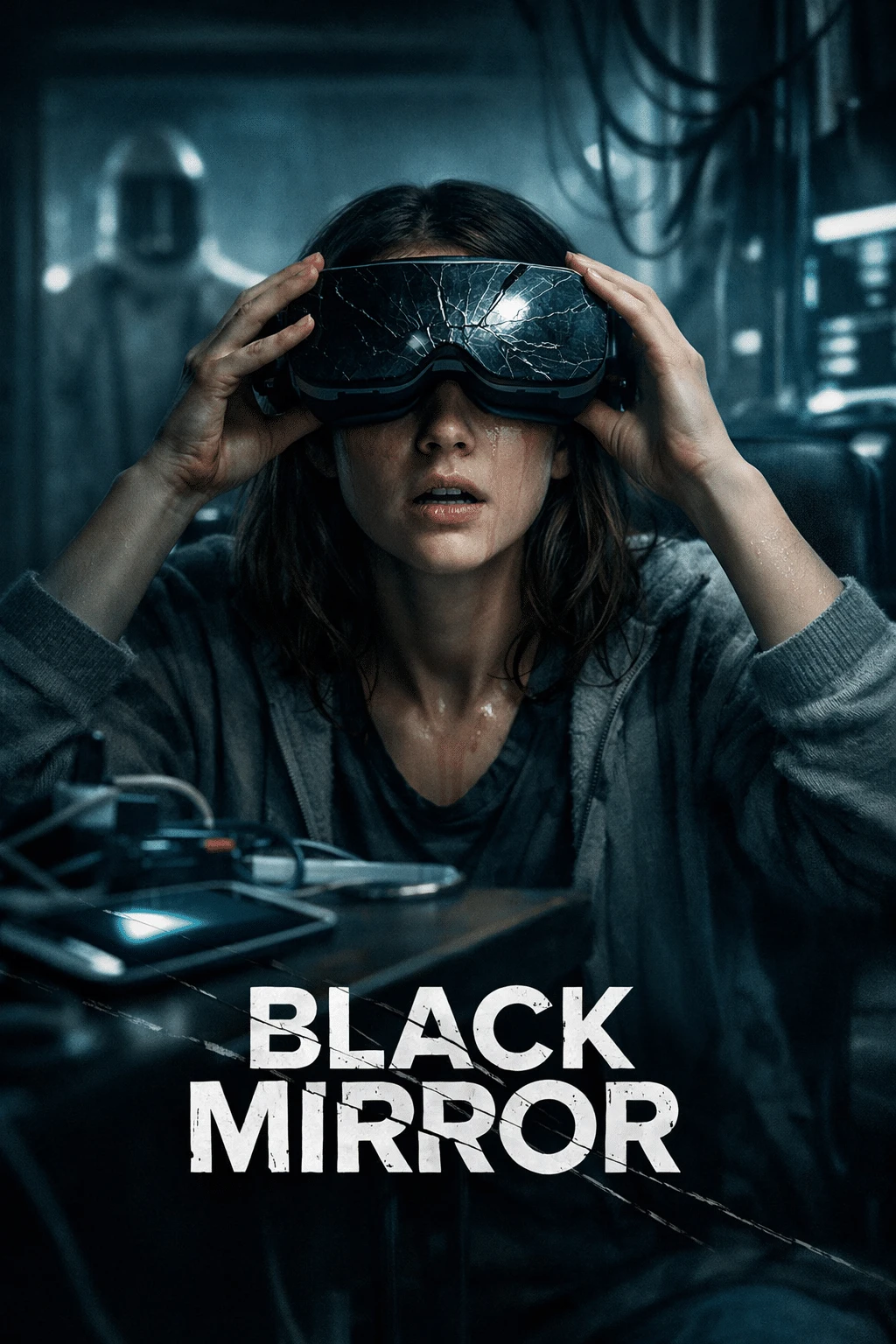
Hello, everyone! How are you doing? Today, I’m here to discuss the revolutionary anthology series Black Mirror, which has emerged as one of Netflix’s most thought-provoking and unsettling original offerings.
Advertisements
Black Mirror first aired in 2011 on Channel 4 before Netflix took over and started producing fresh episodes in 2016. The series comprises 6 seasons with a total of 27 episodes, each varying between 41 to 90 minutes. Created by Charlie Brooker, this British anthology delves into the darker aspects of technology and its influence on human connections, society, and our deepest fears.
Every episode of Black Mirror tells a unique story set in an alternate universe where technology has developed in twisted and often alarming ways. The series boldly tackles subjects like social media addiction, artificial intelligence, virtual reality, and digital monitoring. What makes Black Mirror exceptionally engaging is its ability to reflect our current relationship with technology, presenting potential futures that feel alarmingly plausible.
Dark Narratives of Future Technology
Black Mirror operates on a straightforward yet brilliant concept: what occurs when our technological advancements surpass our emotional and ethical growth? Each episode acts as a warning, examining various facets of a digital life gone awry. From social credit systems evaluating your worth to AI companions that confuse love with programming, the series consistently presents narratives that compel viewers to reflect on their own interactions with technology.
The anthology structure permits Black Mirror to investigate diverse genres while adhering to its central theme. Whether it’s psychological horror, dark comedy, or dystopian narrative, each episode weaves a complete story that stands independently while contributing to the series’ broader exploration of technological concerns.
San Junipero: Love Beyond the Digital Divide
One of the most celebrated episodes, “San Junipero,” highlights Black Mirror‘s capability to uncover hope amidst despair. This Emmy-winning installment follows Kelly and Yorkie as they explore love and identity within a digital afterlife simulation. What starts as a nostalgic romance set in the 1980s transforms into a profound reflection on consciousness, aging, and the essence of truly living.
This episode illustrates how Black Mirror can defy expectations, taking what seems to be a simple period piece and unveiling layers of science fiction intricacy. Kelly and Yorkie’s relationship prompts viewers to ponder whether a digital existence can offer genuine human connection and joy.
USS Callister: Gaming as a Digital Prison
“USS Callister” provides one of Black Mirror‘s most disturbing examinations of authority and dominance in digital realms. The episode follows Robert Daly, a brilliant yet socially awkward developer who constructs a virtual reality game where he can exert god-like control over digital replicas of his colleagues. What begins as harmless escapism quickly exposes itself as psychological torment on an unprecedented scale.
This episode skillfully merges elements of classic Star Trek with body horror and workplace drama, crafting a narrative that scrutinizes toxic masculinity, corporate culture, and the perilous possibilities of virtual reality technology. The digital consciousness copies trapped in Daly’s game represent some of Black Mirror‘s most relatable characters, striving for freedom in a reality where their creator wields absolute power.
Nosedive: Your Worth Based on Social Media Ratings
“Nosedive” depicts a reality where social media interactions translate into numerical ratings that influence every aspect of your life. Following Lacie as she desperately attempts to enhance her social score for better housing and opportunities, the episode serves as a scathing satire of our contemporary social media fixation.
The pastel-hued dystopia of “Nosedive” feels especially pertinent in an age dominated by Instagram influencers and the need for social validation through likes and shares. Bryce Dallas Howard’s portrayal of Lacie encapsulates the exhausting performative nature of online personas and the psychological strain of constant social scrutiny.
Netflix’s Sci-Fi Horror Masterpiece
Black Mirror has become one of Netflix’s most successful acquisitions, consistently ranking among the platform’s most-viewed and discussed series. The show’s anthology format is ideal for binge-watching, allowing viewers to enjoy episodes in any sequence while still experiencing complete narratives. Critics and audiences alike commend the series for its foresightful storytelling, with numerous episodes feeling like predictions of technological advancements that eventually materialize. The production quality, performances, and writing consistently uphold a high standard throughout all seasons, establishing Black Mirror as a remarkable example of contemporary science fiction television.
Why You Should Consider Black Mirror for Your Next Digital Detox
If you appreciate psychological thrillers woven with a technological twist, Black Mirror is an ideal series to binge-watch on Netflix. Each episode presents a self-contained narrative that will prompt you to reconsider your relationship with the devices and platforms that shape modern existence.
A Reflection We Can’t Ignore
Black Mirror excels because it doesn’t merely forecast the future—it mirrors our current anxieties about technology back at us in the most disconcerting ways, making it crucial viewing for anyone seeking to comprehend our digital era.
Series Overview
Number of Episodes: 27 episodes across 6 seasons
Platform: Netflix (originally Channel 4)
Release/End Year: 2011-2023 (ongoing)
Current IMDb Rating: 8.7/10
Genre: Science Fiction, Anthology, Psychological Thriller
Status: Ongoing series with occasional new episodes
Main Creator: Charlie Brooker
Notable Cast: Varies by episode (anthology format)