
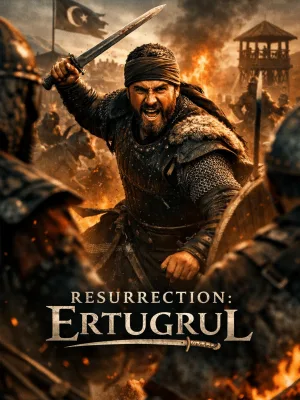
Hello, everyone! How’s everything? Today, I’m excited to share my thoughts on the series Ertugrul: The Epic Tale, a groundbreaking show that transformed the historical drama landscape by vividly depicting the legendary origins of the Ottoman Empire through monumental battles, intricate political schemes, and the motivational journey of a warrior destined to alter history.
Advertisements
Ertugrul: The Epic Tale debuted on December 10, 2014, encompassing 5 seasons with a total of 150 episodes (divided into 448 episodes on Netflix), each running approximately 120 minutes in its original form. This Turkish historical fiction adventure series, crafted by Mehmet Bozdağ, aired on TRT 1 and features Engin Altan Düzyatan in the role of Ertugrul Ghazi. The series skillfully delves into themes of honor, justice, faith, and leadership, while narrating the struggles of Turkic tribes in the 13th century that ultimately led to the emergence of the powerful Ottoman Empire.
Netflix began streaming the series internationally from 2016-17 up until 2023, garnering positive reception in Turkey and other nations like Pakistan and Azerbaijan. The unique aspect of Ertugrul: The Epic Tale is its ambitious narrative, merging genuine historical details with engaging personal drama and visually stunning battle scenes that rival major Hollywood films.
When Virtue Paves the Way for an Empire
The plot revolves around a Turkish warrior from the 13th century who, after unintentionally jeopardizing his tribe through a noble act, agrees to combat a sultan’s foes in exchange for new tribal territory. Ertugrul Ghazi navigates the perilous political landscape with the Kayı tribe, confronting both external and internal adversaries while dedicated to safeguarding his people and upholding the ideals of justice and faith.
The main storyline chronicles Ertugrul’s transformation from a tribal leader to a historic icon whose deeds would lay the foundation for his son Osman’s forthcoming empire. Each season introduces fresh challenges, from Byzantine plots to Mongolian invasions, while examining how one man’s steadfast moral principles can alter the fate of entire civilizations.
Ertugrul (Engin Altan Düzyatan): The Virtuous Warrior with Firm Beliefs
Ertugrul stands out as one of the most captivating protagonists in historical drama, embodying a perfect blend of martial skill and spiritual insight. Engin Altan Düzyatan delivers a performance that defines his career, illustrating Ertugrul’s steadfast dedication to justice, even at a personal cost. His character exemplifies the concept of leadership through service, consistently prioritizing his people’s needs over his own aspirations.
Throughout the series, Ertugrul’s character development emphasizes his evolution from a young tribal chief learning to maneuver through complicated political dynamics to a seasoned diplomat whose decisions influence the fate of vast regions. His journey encompasses mastering not only the art of warfare but also the more demanding task of forging enduring peace through strength and wisdom.
Halime Sultan (Esra Bilgiç): The Princess Who Prioritized Love Over Authority
Halime Sultan is portrayed as both Ertugrul’s love interest and his intellectual counterpart, symbolizing the refined Byzantine culture that intersects with nomadic Turkic tribes. Esra Bilgiç brings nuance and strength to a character that could have easily been stereotyped as a mere romantic interest in a period drama. Instead, Halime evolves into a crucial component of the political and emotional narratives.
The bond between Ertugrul and Halime represents the connection between diverse cultures and civilizations, with their romance serving as a metaphor for the peaceful coexistence that Ertugrul aspires to achieve on a broader scale.
Laying the Groundwork for a Future Empire
The series showcases multiple dramatic peaks throughout its five seasons, each contributing to the realization of Ertugrul’s vision for a fair society. The overarching climax revolves around the establishment of the foundations that would later develop into the Ottoman Empire, with Ertugrul’s final triumphs serving as both personal victories and pivotal historical milestones.
The final episode aired in Turkey on May 29, 2019, concluding five seasons, followed by the sequel Resurrection Osman, which continues the legacy. The conclusion skillfully merges historical accuracy with emotional fulfillment, illustrating how Ertugrul’s values and actions set the stage for the greatness of his descendants.
Supporting Characters: A Diverse Array of Historical Figures
The rich supporting cast features fellow tribal chiefs, Byzantine aristocrats, Mongolian generals, and various historical personalities that collectively paint a vivid picture of 13th-century Anatolia. Each character, from devoted allies like Turgut and Bamsi to intricate adversaries representing different political factions, enhances the series’ exploration of leadership, loyalty, and the collision of civilizations.
The series excels at crafting multi-dimensional characters whose motivations remain comprehensible, even when they find themselves in opposition to Ertugrul, creating a realistic portrayal of historical conflicts where the lines between right and wrong are often blurred.
Success on Netflix: A Global Sensation in Historical Drama
The show ran for five seasons on the Turkish network, producing 150 episodes, but when added to Netflix, it was divided into 448 episodes, making it one of the most extensive historical drama series available on the platform. It achieved immense international fame, especially in Muslim-majority countries, due to its positive representation of Islamic values and historical Muslim figures. Viewers often found themselves binge-watching all 464 episodes, a testament to the show’s captivating storytelling and high production standards. Its global triumph helped position Turkish historical dramas as a significant export industry and laid the groundwork for many similar productions.
For enthusiasts of epic historical dramas that offer authentic period details and motivational themes of leadership, Ertugrul: The Epic Tale is an ideal series to indulge in on Netflix.
Ertugrul: The Epic Tale reinvents historical drama through its stunning production quality, genuine period details, and inspirational narratives that illuminate the legendary foundations of one of history’s greatest empires.
Series Information:
- Episodes: 150 (448 on Netflix)
- Available On: Netflix (originally TRT 1, also accessible on various international platforms)
- Rating: 7.9/10
- Genre: Historical Drama, Action, Adventure, War
- Main Characters: Engin Altan Düzyatan (Ertugrul), Esra Bilgiç (Halime Sultan)
- Supporting Cast: Hülya Darcan, Kaan Taşaner, Cengiz Coşkun, Serdar Gökhan, Cavit Çetin Güner