
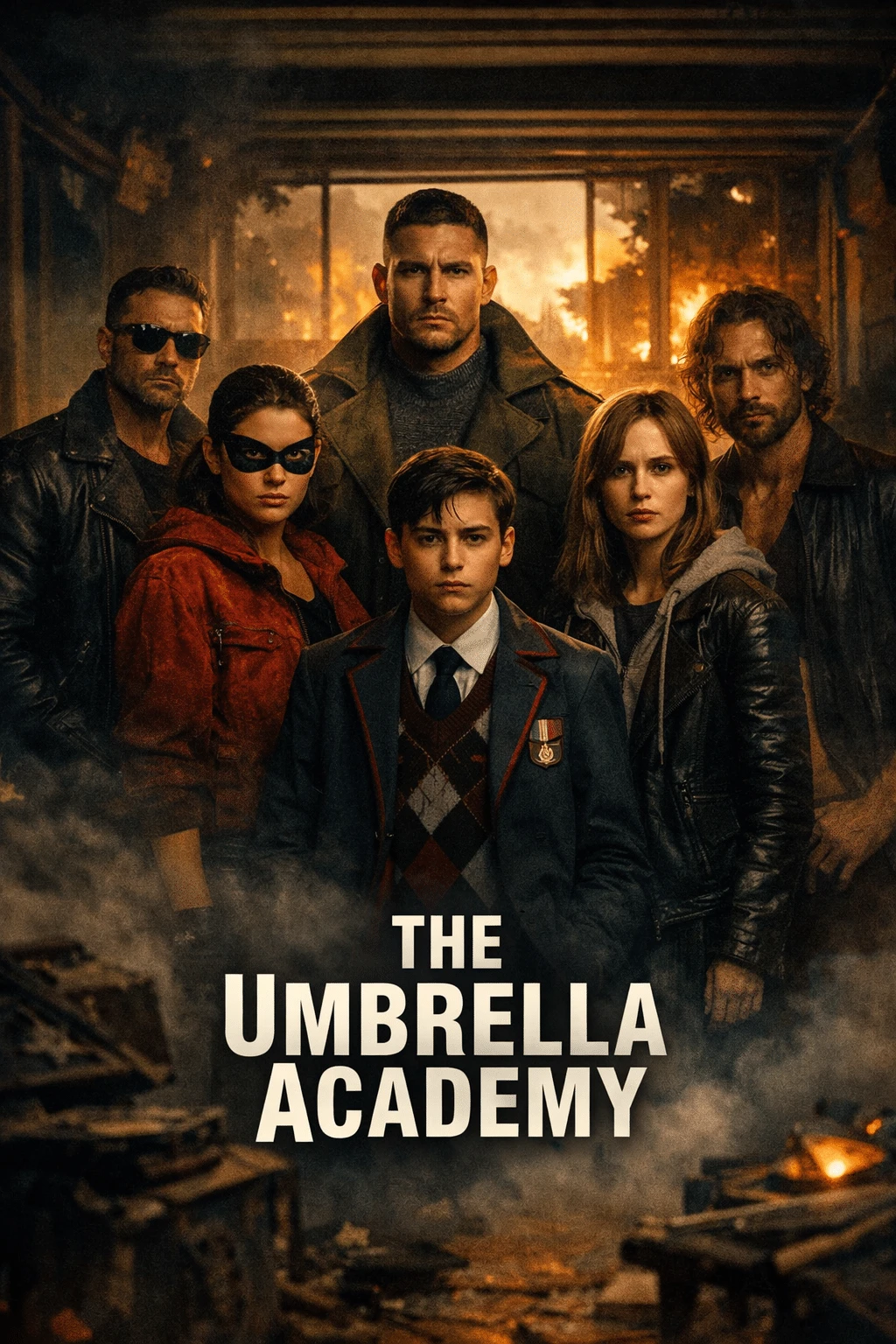
Hello, everyone! How’s life treating you? Today, I’m excited to share my thoughts on the series The Umbrella Academy, which brilliantly redefined the superhero genre by highlighting a severely dysfunctional family of former child heroes who must confront their inner demons to avert numerous apocalypses.
Advertisements
The Umbrella Academy made its debut on Netflix on February 15, 2019, offering 36 episodes over four seasons, concluding on August 8, 2024. Each episode spans roughly 50-60 minutes, making it an excellent choice for binge-watching dark superhero dramas. This Netflix original, adapted from Gerard Way’s comic series, centers around seven adopted siblings with extraordinary talents, trained as young superheroes by their quirky billionaire father, Sir Reginald Hargreeves, who have since drifted apart until a mysterious death reunites them to prevent the world’s end.
The show expertly intertwines dark humor with real emotional depth, crafting a superhero narrative that emphasizes character development over action sequences. Unlike conventional superhero tales that center on saving the day, The Umbrella Academy delves into how childhood trauma, familial dysfunction, and unresolved grief can hinder even the mightiest individuals from forming basic human connections. The apocalyptic backdrop serves as a vehicle for exploring how fractured families can either self-destruct or achieve redemption through understanding and forgiveness.
What distinguishes this Netflix series is its dedication to portraying superheroes as deeply flawed individuals, whose powers often lead to greater challenges than solutions. The show refrains from glorifying heroism; instead, it investigates how extraordinary abilities can turn into burdens when coupled with emotional turmoil and family discord. The Umbrella Academy demonstrates that the most captivating superhero narratives focus on the individuals behind the powers and the relationships that shape them.
Number Five: The Time-Traveling Assassin in a Child’s Body
Aidan Gallagher shines as Number Five, a 58-year-old assassin trapped in a 13-year-old’s body due to a time-travel accident, who returns to alert his siblings of the looming apocalypse. Throughout The Umbrella Academy, Five embodies the show’s perfect mix of dark comedy and genuine emotion, as his adult cynicism and combat skills clash with his juvenile exterior and intense affection for his family. His dynamics with his siblings create ongoing tension as they grapple with taking seriously someone who appears as a child yet bears decades of trauma.
The series leverages Five’s distinctive circumstances to probe themes of sacrifice, accountability, and the weight of knowledge. His character arc illustrates how someone can become hardened by their experiences while still cherishing the core relationships that define their humanity, even when those connections seem irreparable.
Vanya/Viktor Hargreeves: The Powerless Sibling with Hidden Secrets
Elliot Page’s depiction of Viktor Hargreeves (formerly Vanya) offers one of the series’ most intriguing character journeys, following an individual who thought they were ordinary among a family of superheroes, only to realize they wield the most perilous powers of all. The series treats Viktor’s path of self-discovery with exceptional care, addressing both their destructive abilities and gender transition, which mirrors Page’s own transition beautifully in later seasons.
The Umbrella Academy utilizes Viktor’s narrative to investigate themes of exclusion, identity, and the dire repercussions of denying one’s true self. Their character exemplifies how family secrets and emotional manipulation can generate the very dangers they aim to avert, highlighting that the most destructive force within any family is often unacknowledged pain and resentment.
The Hargreeves Siblings: A Family Bonded by Trauma
The other siblings, Klaus, Diego, Allison, Luther, and Ben, each represent varied responses to childhood trauma and parental manipulation. Klaus’s substance issues conceal his fear of his necromantic skills, Diego’s vigilante tendencies arise from his need to prove his worth, Allison wrestles with the ethics of her reality-altering gifts, Luther struggles with blind loyalty to a father unworthy of it, and Ben’s ghostly presence serves as the family’s moral compass. Their interactions form the show’s emotional nucleus, illustrating how shared trauma can both unite and fracture families.
The chemistry among the cast feels genuine, especially during moments when their adult conflicts clash with childhood memories and unresolved sibling dynamics. The Umbrella Academy excels in portraying how family ties can remain stuck in patterns established during childhood, even as the individuals involved evolve and change dramatically.
The Final Season: When Everything Unravels and Reunites
The series reaches its emotional and narrative zenith in the fourth season, as all timelines and character journeys converge towards the resolution of the Hargreeves family saga. The Umbrella Academy fulfills its promise of examining what occurs when fractured individuals must choose between personal aspirations and collective survival. The concluding episodes showcase how the siblings’ individual growth throughout the series has prepared them for daunting choices about family, sacrifice, and what it truly means to save a world that may not warrant saving.
Rather than delivering straightforward heroic conclusions, the finale explores how redemption necessitates the acceptance of responsibility for previous errors while opting to act with love rather than fear, even when the stakes are monumental.
A Netflix Success Story
The Umbrella Academy emerged as one of Netflix’s most successful original series throughout its four-season run from 2019 to 2024, receiving critical praise for its unique approach to superhero storytelling and outstanding ensemble performances. Based on Gerard Way’s comic book series, the show demonstrated that audiences craved superhero narratives that emphasized character development and emotional authenticity over mere spectacle and action. Each season skillfully balanced dark humor with genuine sentiment, crafting a viewing experience that appealed to both superhero enthusiasts and those seeking intricate family drama. The Umbrella Academy showcased Netflix’s capability to adapt unconventional source material while preserving the core essence that made the original comics compelling, establishing a new benchmark for how superhero stories can explore themes of trauma, familial dysfunction, and redemption.
A Must-Watch for Fans of Complex Characters
If you have a penchant for dysfunctional family dynamics, time-travel enigmas, and superhero tales that prioritize emotional truth over idealistic heroism, The Umbrella Academy is an ideal series to binge-watch on Netflix. The series thrives because it consistently acknowledges that the most potent force in any narrative is love, even when that love is complicated, painful, and challenging to articulate.
Why This Superhero Narrative Resonates Differently
The Umbrella Academy illustrates that the finest superhero stories aren’t solely about rescuing the world; they’re about saving the people we cherish, including ourselves. This Netflix series crafted something truly remarkable by revealing that the most extraordinary power any of us possesses is the capacity to choose forgiveness, growth, and love over the patterns that have shaped and harmed us, even when such choices come with insurmountable costs.
Series Overview
Number of Episodes: 36 episodes (4 seasons, completed series)
Platform: Netflix
Release/End Year: 2019-2024
Current IMDb Rating: 7.9/10
Genre: Superhero Drama, Dark Comedy, Sci-Fi
Status: Completed series
Main Characters: Elliot Page (Viktor Hargreeves), Tom Hopper (Luther Hargreeves), David Castañeda (Diego Hargreeves), Emmy Raver-Lampman (Allison Hargreeves), Robert Sheehan (Klaus Hargreeves), Aidan Gallagher (Number Five), Justin H. Min (Ben Hargreeves)
Supporting Characters: Colm Feore (Sir Reginald Hargreeves), Mary J. Blige (Cha-Cha), Cameron Britton (Hazel), various timeline characters and apocalypse survivors