
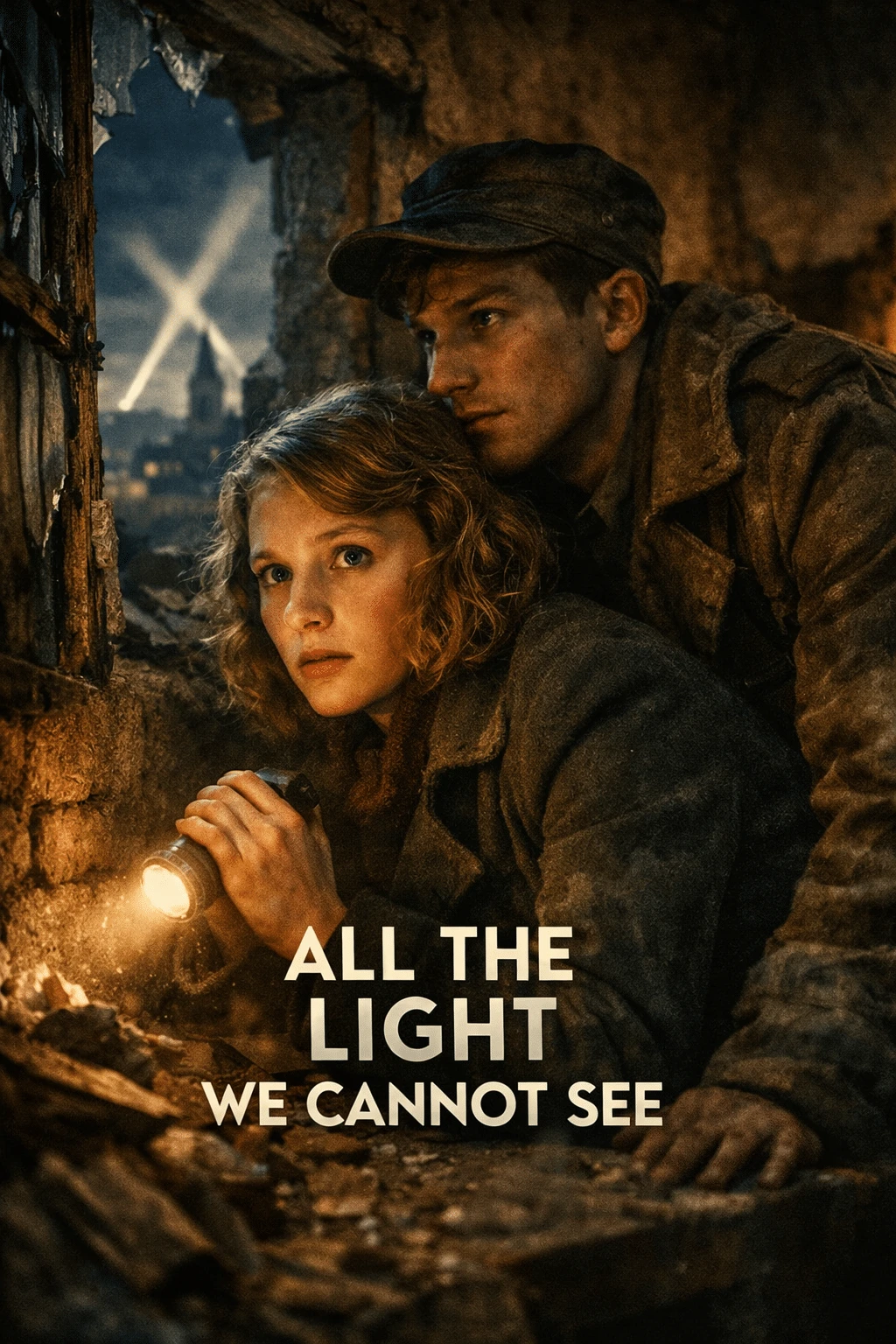
Hello, everyone! Hope you’re doing well! Today, I’m here to share my thoughts on the drama All the Light We Cannot See, which transforms Anthony Doerr’s cherished Pulitzer Prize-winning novel into a visually captivating yet emotionally inconsistent wartime narrative that struggles to reflect the literary brilliance of its source.
Advertisements
All the Light We Cannot See debuted on Netflix on November 2, 2023, consisting of 4 episodes, each approximately 60 minutes long. Based on Anthony Doerr’s renowned novel, this limited series narrates the parallel journeys of Marie-Laure, a blind French teenager, and Werner, a German soldier, whose lives intersect in occupied France during World War II. Crafted by Steven Knight and directed by Shawn Levy, the adaptation assembles a diverse cast led by newcomer Aria Mia Loberti and Louis Hofmann.
All the Light We Cannot See transcends the typical World War II drama. It’s an ambitious endeavor to adapt one of contemporary literature’s most revered works into visual art, delving into themes of endurance, love, and the invisible ties that unite us in humanity’s bleakest moments. The series employs radio waves and electromagnetic fields as symbols for the unseen forces linking all living beings.
Intersecting Lives: Love Amidst Adversity
All the Light We Cannot See intricately intertwines the narratives of Marie-Laure LeBlanc, a visually impaired French girl living with her father in Nazi-occupied Saint-Malo, and Werner Pfennig, a German orphan whose technical genius lands him in the Wehrmacht. Their lives connect through radio broadcasts and ultimately face-to-face encounters that challenge their perceptions of enemies and allies.
The narrative unfolds how war reshapes ordinary individuals into survivors, highlighting Marie-Laure’s blindness as both a vulnerability and a source of strength in a darkened world. Werner’s storyline delves into the moral dilemmas of being a compassionate person ensnared in a malevolent system, as his allegiance to friends clashes with his growing awareness of Nazi horrors. The intertwined tales carefully build towards their destined encounter, emphasizing fate and connection.
Marie-Laure LeBlanc: A Genuine Performance by Aria Mia Loberti
Aria Mia Loberti, who is visually impaired in reality, delivers a heartfelt performance as Marie-Laure, providing authentic representation for the character. Her portrayal encapsulates Marie-Laure’s intellect, curiosity, and fierce resolve to survive while preserving her humanity in dire situations. Loberti’s acting feels sincere rather than contrived, sidestepping the condescending portrayal often seen in mainstream media regarding disabled characters.
Marie-Laure’s character development illustrates how physical challenges can serve as sources of insight and strength. Loberti presents a young woman navigating her environment through sound, touch, and intuition, making her uniquely capable of surviving in a world where shadows prevail. Her bond with her father and later with Etienne adds emotional richness to what could have been a straightforward tale of survival.
Werner Pfennig: Louis Hofmann’s Ethical Dilemma
Louis Hofmann portrays Werner as a young man torn between his innate compassion and the harsh realities of military service. His performance captures Werner’s inner turmoil as he witnesses atrocities while striving to retain his humanity and protect his loved ones. Hofmann infuses vulnerability and intellect into a role that could easily have been reduced to a typical “good German” stereotype.
Werner’s narrative probes the moral intricacies of complicity and defiance under totalitarian regimes. His technical prowess with radio equipment renders him valuable to the German military, providing glimpses of the world beyond through intercepted signals. Hofmann reveals a character who comprehends the malevolence he is part of yet feels helpless to extricate himself without forsaking his friend Volkheimer.
The Sea of Flames: Enigmatic Elements in War
The series integrates the mystical Sea of Flames diamond from Doerr’s novel, symbolizing both a curse and a safeguard that connects the characters across time and space. The concluding episodes intertwine all narrative threads as Marie-Laure and Werner’s encounter becomes a moment of grace amidst the turmoil of war’s conclusion. Their fleeting connection illustrates the ability of human kindness to rise above the artificial divides of nationality and conflict.
The climactic episodes grapple with harmonizing the novel’s poetic aspects with television’s demand for dramatic tension. The resolution satisfies the romantic elements while confronting the brutal truths of war, although some viewers found the ending overly sentimental compared to the book’s more subtle conclusion.
Voices Amidst the Shadows
All the Light We Cannot See features impressive supporting performances from Mark Ruffalo as Marie-Laure’s devoted father Daniel, Hugh Laurie as the reclusive Etienne, and Lars Eidinger as the conflicted Sergeant Major von Rumpel. Each supporting character embodies various responses to wartime pressures, from quiet heroism to desperate survival and moral compromise.
The series particularly shines in its depiction of the French Resistance and civilian life under occupation. The supporting ensemble creates a genuine sense of a community besieged, where every action holds potentially fatal consequences and trust becomes the most valuable asset.
Netflix Success
All the Light We Cannot See garnered substantial viewership on Netflix despite receiving mixed reviews from critics. The series showcases Netflix’s dedication to prestigious literary adaptations while underscoring the challenges of translating beloved novels into visual formats. Although critics found the adaptation lacking compared to Doerr’s original, audiences responded positively to the authentic casting choices and stunning cinematography, particularly the location shooting in France.
Why You Should Watch This Wartime Drama
If you enjoy historical dramas that delve into the human toll of war through intimate personal tales, All the Light We Cannot See is an excellent series to binge-watch on Netflix. While it may not encapsulate all the literary enchantment of Doerr’s novel, it offers heartfelt emotion, genuine representation, and breathtaking cinematography that vividly portrays wartime France.
Why This Adaptation Highlights Human Connections
All the Light We Cannot See effectively illustrates how love and compassion can endure even in humanity’s bleakest moments. Despite its shortcomings as an adaptation, the series offers authentic instances of beauty and connection that remind us why stories of wartime resilience continue to resonate. It’s visually captivating, emotionally heartfelt, and ultimately optimistic about the human capacity for goodness.
Series Information
Number of Episodes: 4 episodes
Platform: Netflix
Release Year: 2023
Current IMDb Rating: 7.5/10
Genre: Historical Drama/War Romance
Status: Limited series (completed)
Protagonists: Aria Mia Loberti (Marie-Laure), Louis Hofmann (Werner)
Antagonist: The Nazi occupation and the brutality of war itself